Thursday, September 28, 2017

Technical Competencies- Exposure

Image result for exposure triangle

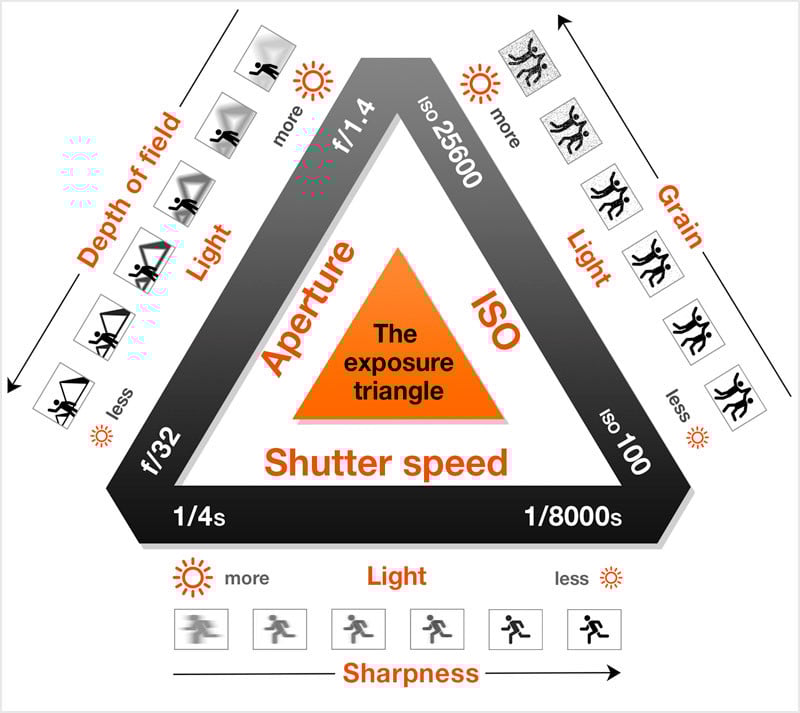
In today's lesson, I have increased my knowledge based around my role for IEA(Product technician) by learning about the exposure triangle and all of its aspects. As a whole, exposure is the measurement of the amount of light which is absorbed when taking a photo. This can be differed by ISO, Shutter Speer and Aperture.

ISO

ISO is the sensitivity of the image sensor to light while taking the photo. The higher the ISO, the finer the grain of the image, the lower the ISO, the photo is seemed to look fuzzy or grainy. Usually, photographers take low ISO images in areas with little light because with low ISO, it can absorb more light due to the increased sensitivity.

Shutter Speed

Shutter speed is the the amount of time the camera shutter is opened while being exposed to light during taking photos, shutter speed is usually used to capture object in motion or motionless. The higher the shutter speed, the more motion is seemed to be captured, the lower the shutter speed, the more it seems to make the object motionless

Aperature

Aperture is the stage before ISO. Before ISO happenings, there is a lens that can change its size which affects the amount of light that reaches the sensor. The higher the aperture, the lower the depth of field, the lower the aperture, the lower the depth of field. Depth of field means the focus range of the image meaning more of the background is captured, this is a wide depth of field and narrow depth of field means that less background is captured but the foreground is the main target of the image.

Thursday, September 21, 2017

Planning and Research - Planning Interviews


Time
Interviewee and Location
Useful B-Roll Shots to be taken
Questions to be asked of interviewee
Technical Issues and Actions to take
Wednesday 25th October 3.30pm
Dana Winograd

Plastic Free Seas
21/F Chun Wo Commercial Building
Central
Everyone working (ask permission)

Footage of any materials they may have, or examples of the different types of plastic waste they find, i.e. microplastics, macro plastics and so on.
Why did you choose to work for plastic free seas?

How is plastic free seas tackle this issue?

What are some things children our age can do to help solve this issue?

How are you incorporating these solutions into your daily life?

What is the extent of this issue in Hong Kong? What do you think the future holds for us locally and globally?

How do you approach this issue when speaking with a younger target audience?

What goals have you achieved since joining plastic free seas?
Issue: room is small so may struggle to fit in the whole group.

Action: only have a certain number in (i.e. the production technicians and director).

Issue: background noise from streets may interfere with sound quality.

Action: use a microphone and do a couple of test runs to see if the sound is okay.  
N/A - unable to interview as it was too difficult to get a hold of her (did not reply to emails.)
Eve Kwan

Chartwells
Island School
Students throwing away plastic cups, cutlery, bowls, plates etc. in the bin after eating food.
What is your take on the issue of (single use) plastic waste in Hong Kong?
Is Chartwells doing anything to help solve this issue?

What further action do you think Chartwells could take to improve the issue?
Issue: students may be loud during snack and lunch times

Action: good quality mic should be used and the interview should take place in a quiet room, the library would be convenient.

Thursday, September 14, 2017

Planning and Research: Shooting film on a phone

Planning and research: Aims and Objectives

Interview filming:

  • Watch behind the scenes of a typical interview
  •  To understand angles which work for interview

B-Roll filming:

  • Find examples of B-Roll used in interviews 
  • Practice B-Rolling

Organisation and Preparation of equipment:

  • To know the equipment used in recording footage
  • To borrow equipment from I.T
  • Know what equipment is needed and which isn't 

Audio Recording:

  • Use good quality microphones to achieve the best audio possible
  • To know how to use a microphone
  • Know the basics of a microphone

In this task, I had to make aims and objectives for myself based around my role, product technician. As shown above, I have listed some basic topics on filming and simple objectives under each category. As usual, I hope these aims and objectives help me in the future and make me aim higher.


Planning and research: Microphones


This task was mainly based around information on microphones, I found out about microphones proximity as well as different types of microphones. Firstly, distance between a person during a shoot and the microphone can show obvious differences as the further away the microphone is, the more background sound is captured and also the audio isn't as good. Secondly, there are mainly two types of microphone, dynamic and condenser. Each of them are used in different conditions and both have their pros and cons. For example, the condenser is more high quality but less durable than the dynamic.

Planning and Research:Framing, Focusing, Camera movement

In this task, I learned about Framing and focusing techniques such as different types of shots like wide shot and medium shot, different types of angles like high and low angle and the types of focusing like the blur effect and also the camera zoom effect. During this task I have also learned about the basics of camera movement. For example: Pan, Tilt and point of view.

The skills I have learned in this task will be essential when I do my interviews because these skills can make a difference to my results by making it more professional and usually better quality, I've been told many times to strive to record high quality footage for my group as no one wants to see poor and unprofessional recorded footage when we finish our project.

In my opinion, I did not find a lot of challenges during this task as most of this task is based around a simple test the end but what I did find was that the test at the end was quite hard because it was either me not concentrating or  

Planning and Research

Activity 1

For my first task, I am learning about my role is in the group and what my responsibilities are as a production technician. During this task I have learned that I will need to learn about different types of video shooting like A-roll and B-roll, technical aspects like focus and lighting, the use of a microphone and so on. I have also learned about the fact that I will mainly collaborate with the Editor because the editor will have to perfect the footage I shoot.

Thursday, September 7, 2017

IEA award 17/18 Introduction

Introduction

This year for IEA, I am taking the role of "Production Technician" and my main focus is recording footage for the final outcome and to be in charge of audio and sound. This year will be completely different as I am mainly going to use the camera and I will spend less time on my laptop but this might change because I hear that this role contains a lot of individual work. Starting from today, second year of IEA starts and I will work harder than last year to achieve better results.


Team Project Aims: What does your team aim to achieve through the investigation of this topic area and issue?
Aim 1: (main aim)
Reduce use of plastic at school.
  • Join WANBO club to get a better understanding on how the environmentalists in school help make it a greener place
  • Can help with our research and data collecting/analysis of amount of plastic wasted in school
  • Brainstorm ideas on how to stop cafe from providing free cutlery with food
    • Raise prices on forks and spoons
    • Make students bring in own cutlery
    • Have one day a week when there will be zero plastic used and everyone has to bring their own cups, plates, cutlery, etc
Aim 2:
Create a solution that is sustainable and will enable students to be more conscious about how much plastic they use on a daily basis at home or at school.
  • Make an effective outcome that will last even after the project is finished
Aim 3:
Reduce use of plastic at home and outside school.
  • After seeing how much plastic the school uses with food and drinks, we can take this thought home and pay more attention on how we can reduce plastic use with our families
The table shown above is my group's aims and objective, we are trying to achieve each and everyone of them throughout this course hoping that these goals will help us gain success in our project.